
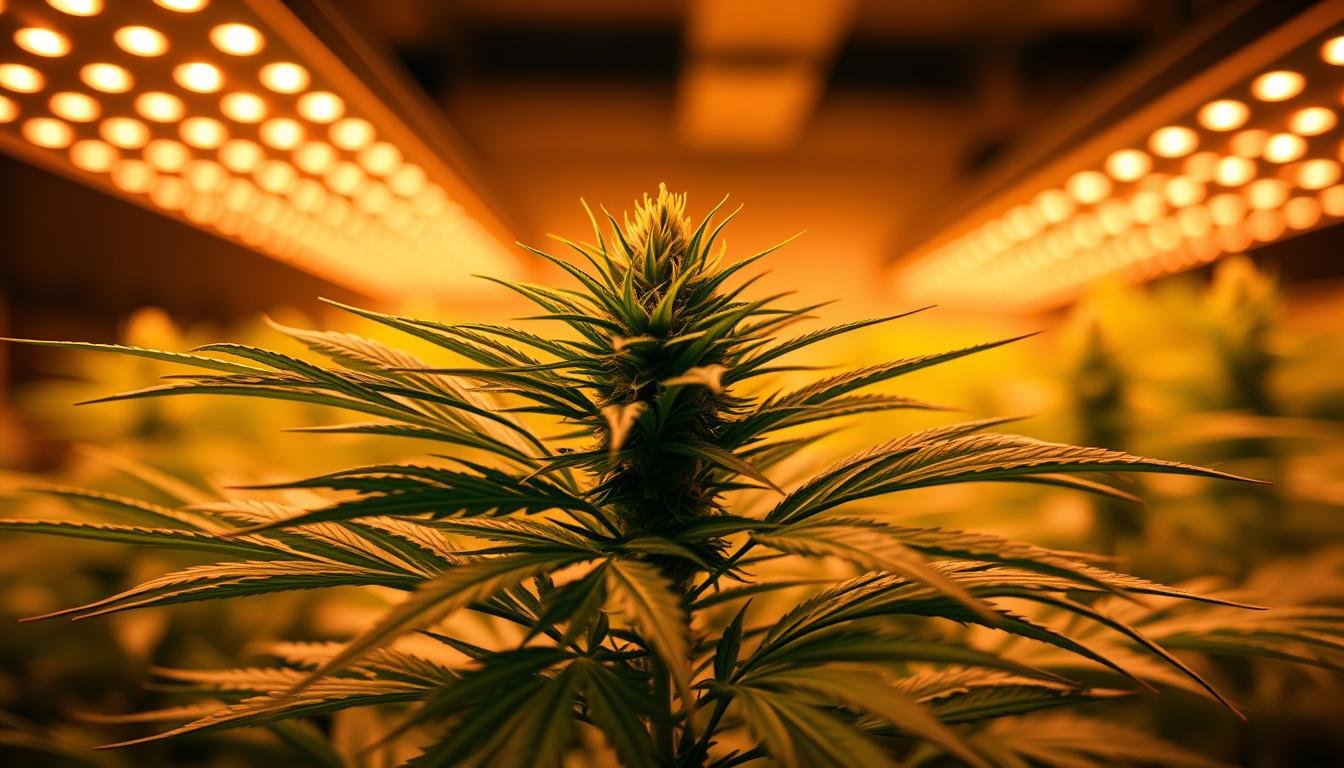
Cultivating cannabis is a delicate process, and one of the most critical factors is providing the right amount of light. Did you know that cannabis plants require a substantial amount of light energy to thrive and produce high yields? In fact, inadequate lighting can lead to weak and spindly plants, while too much light can cause damage and reduce yields.
To achieve optimal results, growers need to strike the perfect balance. By understanding the importance of efficient lighting, cultivators can promote healthy growth and maximize their yields. In this article, we’ll explore the best practices for maximizing light efficiency.
Key Takeaways
- Understand the light requirements for cannabis cultivation
- Learn how to optimize lighting for maximum yields
- Discover the best practices for efficient lighting
- Explore the benefits of proper lighting for healthy plant growth
- Find out how to balance light intensity and duration
Understanding Cannabis Light Requirements
Light is a critical factor in cannabis cultivation, affecting both growth and cannabinoid production. The intensity and duration of light directly impact the plant’s photosynthesis rate, which in turn affects its overall growth, bud development, and cannabinoid synthesis.
The Science of Photosynthesis in Cannabis Plants
Photosynthesis is the process by which cannabis plants convert light energy into chemical energy. This process is crucial for the plant’s growth and development.
Key Photosynthetic Processes
The key photosynthetic processes in cannabis plants involve the absorption of light by pigments such as chlorophyll, the conversion of light energy into ATP and NADPH, and the fixation of CO2 into glucose.
Photosynthesis Stages:
- Light-dependent reactions
- Light-independent reactions (Calvin cycle)
Light Wavelengths Cannabis Needs
Cannabis plants require a specific spectrum of light to undergo photosynthesis efficiently. The primary wavelengths used by cannabis are in the blue and red spectrum.
Blue light promotes vegetative growth, while red light encourages flowering.
Light Spectrum and Its Impact on Growth
The light spectrum has a significant impact on the growth and development of cannabis plants. Different wavelengths of light influence various aspects of plant growth.
Blue Light Benefits
Blue light is essential for promoting healthy vegetative growth in cannabis plants. It encourages the development of leaves and stems.
Red Light Benefits
Red light is crucial for the flowering stage, promoting the development of buds and flowers.
The Importance of Light Intensity for Cannabis
Light intensity is a critical factor in cannabis cultivation, affecting the rate of photosynthesis and overall plant growth. Too little light can result in weak and spindly plants, while too much light can cause light burn.
| Light Intensity | Effect on Cannabis |
|---|---|
| Low | Weak and spindly plants |
| Optimal | Healthy growth and bud development |
| High | Light burn and damaged plants |
By understanding the light requirements of cannabis plants, growers can optimize their lighting setup to promote healthy growth and maximize yields.
Types of Grow Lights for Cannabis Cultivation
Choosing the appropriate grow lights is a critical decision for cannabis cultivators, impacting both the efficiency and effectiveness of their operation. With various options available, understanding the characteristics of each type is essential for making an informed decision.
LED Grow Lights: Efficiency and Benefits
LED grow lights have become increasingly popular among cannabis growers due to their energy efficiency and customizable spectrum. LEDs are the most efficient light sources currently available, making them economical in the long run by reducing electricity costs.
Full-Spectrum LED Options
Full-spectrum LEDs provide a broad spectrum of light that mimics natural sunlight, promoting healthy growth throughout all stages of cannabis development. They are particularly beneficial for growers looking for a single lighting solution for their entire crop cycle.
Targeted Spectrum LEDs
Targeted spectrum LEDs allow growers to tailor the light spectrum to specific stages of cannabis growth. For example, blue spectrum LEDs can enhance vegetative growth, while red spectrum LEDs can promote flowering.
HID Lights: HPS and MH Options
HID (High-Intensity Discharge) lights, including HPS (High Pressure Sodium) and MH (Metal Halide) options, have been a staple in cannabis cultivation for years. They offer high intensity and are effective for both vegetative and flowering stages.
Metal Halide for Vegetative Growth
Metal Halide (MH) lights are often used during the vegetative stage as they emit a blue-rich spectrum that promotes leafy growth and development.
High Pressure Sodium for Flowering
High Pressure Sodium (HPS) lights are commonly used during the flowering stage due to their red-rich spectrum, which encourages bud formation and flowering.
Fluorescent Lights: T5 and CFL Solutions
Fluorescent lights, including T5 and CFL (Compact Fluorescent Lamp) options, are another choice for cannabis growers. They are generally less intense than LEDs and HIDs but can be effective for smaller operations or supplemental lighting.
Comparing Cost, Efficiency, and Results
When selecting grow lights, it’s crucial to consider factors such as initial cost, energy efficiency, and the potential impact on crop yield and quality. LEDs, for instance, may have a higher upfront cost but offer long-term savings through reduced energy consumption.
By understanding the different types of grow lights available and their respective benefits, cannabis cultivators can make informed decisions to optimize their weed lighting setup and improve their overall grow light guide practices.
Cannabis Light Tips for Different Growth Stages
To cultivate cannabis effectively, it’s essential to understand and cater to the specific lighting needs at each stage of growth. Cannabis plants undergo significant changes as they progress from seedlings to mature, flowering plants, and their lighting requirements change accordingly.
Seedling Stage: Gentle Light Requirements
During the seedling stage, cannabis plants require gentle light to promote healthy growth without causing stress. It’s crucial to maintain an appropriate distance between the light source and the seedlings to avoid overheating or light burn.
Distance and Intensity Guidelines
For seedlings, it’s recommended to keep the light at a distance of at least 24 inches to prevent light stress. The intensity should be lower, around 20-30 watts per square meter, to encourage gentle growth.
Vegetative Stage: Promoting Healthy Growth
As cannabis plants enter the vegetative stage, they require more intense light to promote healthy growth and development. The light spectrum also plays a crucial role during this stage.
Optimal Light Spectrum
A light spectrum with a higher concentration of blue light (around 400-500 nm) is beneficial during the vegetative stage, as it promotes leaf growth and development. LED grow lights with adjustable spectra are particularly useful for this stage.
Flowering Stage: Maximizing Bud Production
During the flowering stage, cannabis plants require a different light spectrum to maximize bud production. A shift towards a more red-dominated spectrum (around 600-700 nm) encourages flowering and bud development.
Transitioning Light Schedules
To induce flowering, growers often switch to a 12/12 light/dark cycle. It’s essential to maintain a consistent light schedule to avoid stressing the plants.
| Growth Stage | Light Intensity (W/m²) | Light Spectrum | Light Cycle |
|---|---|---|---|
| Seedling | 20-30 | Blue (400-500 nm) | 18/6 |
| Vegetative | 40-60 | Blue (400-500 nm) | 18/6 |
| Flowering | 60-80 | Red (600-700 nm) | 12/12 |
By adjusting the lighting according to the growth stage, cannabis growers can significantly improve the health and productivity of their plants. Understanding and implementing the right lighting strategies is key to successful cannabis cultivation.
Setting Up Your Weed Lighting Setup
To maximize cannabis growth, understanding how to set up your weed lighting setup is essential. A well-configured lighting system not only promotes healthy plant development but also maximizes yields. Proper setup involves several key factors, including determining the correct height for your lights, calculating the coverage area, and ensuring adequate ventilation.
Determining the Proper Height for Lights
The distance between your cannabis plants and the grow lights significantly affects their growth. LED grow lights, for instance, can be placed closer to the plants than traditional HID lights due to their lower heat output. A general rule of thumb is to start with the lights at a higher distance and gradually lower them as the plants grow.
Light Type-Specific Distance Charts
Different types of grow lights have recommended distance charts. For example, LED lights are typically placed 12-24 inches above the canopy, while HPS lights are usually 18-36 inches away. Refer to the manufacturer’s guidelines for specific recommendations.
Coverage Area Calculations
Calculating the coverage area of your grow lights is crucial to ensure that all plants receive adequate light. Coverage area depends on the type and number of lights used, as well as the layout of your grow space. A general guideline is to provide a certain amount of lumens or PAR (Photosynthetic Active Radiation) per square foot.
Matching Lights to Grow Space
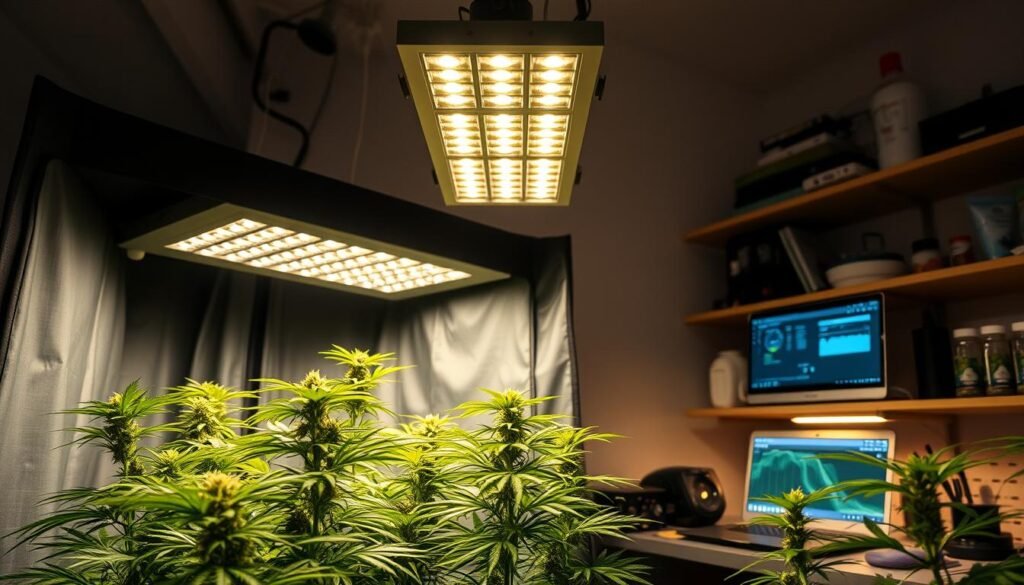
To optimize your weed lighting setup, it’s essential to match the lighting to your grow space. Consider the size of your grow area and the number of plants when selecting and placing your grow lights. A well-planned layout ensures uniform light distribution, promoting healthy and even growth.
Reflective Materials to Maximize Efficiency
Using reflective materials in your grow room can significantly enhance the efficiency of your weed lighting setup. Materials like Mylar or white paint on walls can help reflect light back onto the plants, ensuring that more light is utilized for photosynthesis.
Ventilation Considerations for Heat Management
Adequate ventilation is critical in managing the heat generated by grow lights. Proper airflow helps maintain a healthy temperature, preventing overheating and reducing the risk of heat stress to your plants. Consider using exhaust fans and ventilation systems to regulate the temperature in your grow room.
“Proper ventilation is key to maintaining a healthy grow environment. Without it, heat buildup can stress plants and lead to reduced yields.”
Light Schedules and Timing for Indoor Cannabis Growing
The right light schedule can make a significant difference in the health and productivity of indoor cannabis plants. Indoor cannabis growing requires a deep understanding of how light cycles impact plant development.
Vegetative Light Cycles (18/6 vs. 24/0)
During the vegetative stage, cannabis plants can thrive under different light cycles. Two common approaches are the 18/6 and 24/0 cycles.
Pros and Cons of Each Schedule
The 18/6 cycle, with 18 hours of light and 6 hours of darkness, is often considered a balanced approach, allowing plants to rest while still promoting vigorous growth. In contrast, the 24/0 cycle, with continuous light, can accelerate growth but may lead to increased energy costs and potential stress on the plants.
- 18/6 Cycle: Mimics natural conditions, allows for a dark period, and can be more energy-efficient.
- 24/0 Cycle: Maximizes growth potential but requires careful monitoring to prevent overheating and stress.
Flowering Light Cycles (12/12)
When transitioning to the flowering stage, cannabis plants require a different light schedule to induce flowering.
Triggering and Maintaining Flowering
The 12/12 cycle, with equal periods of light and darkness, signals to the plants that it’s time to flower. Consistency in this schedule is crucial to avoid confusing the plants and to ensure a bountiful harvest.
“Consistency in the light cycle during the flowering stage is key to successful bud development.”
Automating Your Light Schedule
To maintain a consistent light schedule, automating your lighting system is highly recommended.
Timer Options and Setup
Using timers or smart lighting controllers can simplify the process and ensure that your cannabis plants receive the right amount of light at the right time. When setting up your timer, consider the specific needs of your plants at different growth stages.
By understanding and implementing the appropriate light schedules, indoor cannabis growers can significantly enhance the health and productivity of their plants. Whether you’re a novice or an experienced grower, paying attention to light timing and cycles is crucial for achieving optimal results.
Measuring and Optimizing Light Intensity
The right light intensity is vital for promoting healthy cannabis growth and maximizing yields. Measuring and optimizing light intensity is crucial for cannabis cultivation, directly impacting plant health and yield.
Using PAR Meters and Light Meters
To accurately measure light intensity, growers use PAR (Photosynthetic Active Radiation) meters and light meters. These tools help determine the amount of light available for photosynthesis, ensuring that cannabis plants receive the necessary light for healthy growth.
Taking Accurate Measurements
When using PAR meters, it’s essential to take measurements at the canopy level, as this is where the plants are most actively photosynthesizing. Consistency is key; taking multiple measurements can help ensure accuracy.
PPFD and DLI Explained
PPFD (Photosynthetic Photon Flux Density) measures the amount of light that falls on the canopy, while DLI (Daily Light Integral) calculates the total light received over a 24-hour period. Understanding these metrics is vital for optimizing light schedules and intensity.
| Growth Stage | PPFD Range (µmol/s/m) | DLI (mol/day/m) |
|---|---|---|
| Seedling | 100-200 | 10-15 |
| Vegetative | 400-600 | 20-25 |
| Flowering | 800-1000 | 25-30 |
Adjusting Light Intensity Throughout Growth
Different growth stages require different light intensities. Adjusting light intensity accordingly can significantly impact plant health and yield.
Creating a Light Intensity Schedule
Creating a schedule that adjusts light intensity based on the growth stage can help optimize growth. For example, during the flowering stage, increasing light intensity can promote bud development.
By understanding and adjusting light intensity, cannabis growers can significantly improve plant health and maximize yields. Using tools like PAR meters and understanding metrics like PPFD and DLI are crucial steps in this process.
Troubleshooting Common Indoor Cannabis Grow Light Issues
Effective lighting is essential for healthy cannabis growth, but several common issues can arise if not managed properly. Indoor cannabis growers must be aware of these potential problems to optimize their crop’s yield and quality.
Identifying Light Burn Symptoms
Light burn occurs when cannabis plants are exposed to too much light intensity, causing damage to the leaves and potentially reducing yields. Symptoms include bleached or yellowed leaves, curled or twisted leaf tips, and in severe cases, the leaves may become necrotic. To prevent light burn, ensure that the grow lights are at an appropriate distance from the canopy.
Addressing Light Distance Problems
The distance between the grow lights and the cannabis canopy is critical. If the lights are too close, it can cause light burn, while being too far away can result in insufficient light for optimal growth. Regularly check and adjust the light distance as the plants grow.
Dealing with Light Leaks During Dark Periods
Light leaks during the dark period can disrupt the flowering cycle of cannabis plants, potentially leading to reduced bud production or hermaphroditism. Ensure that the grow area is completely light-tight, and consider using light-blocking materials or seals around any vents or doors.
Resolving Uneven Growth Patterns
Uneven growth can be caused by inconsistent light distribution. To address this, ensure that the grow lights are positioned to provide uniform coverage across the canopy. Regularly inspect the plants and adjust the lighting setup as necessary.
Canopy Management Techniques
Proper canopy management is crucial for maximizing light penetration and promoting even growth. Techniques include pruning or training the plants to ensure that all parts of the canopy receive adequate light. This can involve removing lower branches or using techniques like topping or SCROG (Screen of Green) to optimize light exposure.
By understanding and addressing these common lighting issues, indoor cannabis growers can significantly improve the health and productivity of their plants, leading to better yields and higher quality cannabis.
Energy Efficiency and Cost Management
Understanding energy efficiency and cost management can significantly impact cannabis cultivation profitability. As cannabis growers, it’s essential to balance the need for optimal growing conditions with the costs associated with energy consumption.
Calculating Electricity Costs
To manage energy costs effectively, growers must first understand how to calculate their electricity expenses. This involves considering the wattage of their grow lights and other equipment, as well as the duration of their use.
Wattage and Usage Formulas
The formula for calculating electricity costs is relatively straightforward: (Wattage * Hours Used * Cost per kWh) / 1000. For example, using a 1000W LED grow light for 18 hours a day at $0.15 per kWh will cost approximately $2.70 per day.
Energy-Saving Techniques
Implementing energy-saving techniques can significantly reduce electricity costs. Some effective strategies include using energy-efficient LED grow lights, optimizing grow room insulation, and employing smart lighting controls that adjust based on the time of day or the specific needs of the plants.
ROI Analysis of Different Lighting Systems
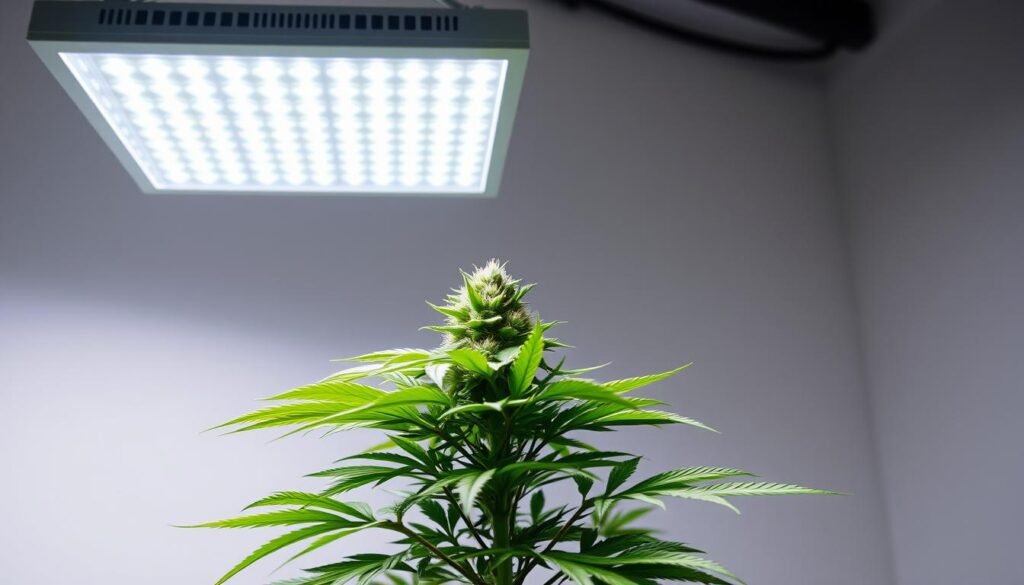
When evaluating different lighting systems, it’s crucial to consider not just the upfront costs but also the long-term savings and return on investment (ROI). LED grow lights, for instance, may have a higher initial cost but offer significant energy savings over time.
Long-term vs. Short-term Investments
While cheaper lighting options might seem appealing in the short term, they often result in higher energy costs and reduced lifespan. Investing in energy-efficient lighting solutions, on the other hand, can lead to substantial long-term savings and improved crop yields, making them a more cost-effective choice in the long run.
Conclusion: Illuminating Your Path to Cannabis Growing Success
Proper lighting is essential for promoting healthy growth and maximizing yields in cannabis cultivation. By understanding the light requirements for cannabis and implementing the right grow light guide, you can significantly improve the quality and quantity of your harvest.
To achieve optimal results, consider the cannabis light tips outlined in this article, from selecting the right type of grow lights to adjusting light intensity throughout different growth stages. Setting up your weed lighting setup correctly, including determining the proper height for lights and using reflective materials, will also contribute to a successful grow.
By applying these principles and being mindful of energy efficiency and cost management, you can create an effective lighting system that supports the overall health and productivity of your cannabis plants. With the right approach, you’ll be well on your way to a bountiful harvest and a thriving cannabis cultivation experience.
FAQ
What is the ideal light spectrum for cannabis cultivation?
Cannabis plants require a balanced spectrum that includes blue, red, and green light. A spectrum with a mix of 400-500nm (blue light) and 600-700nm (red light) is ideal for promoting healthy growth and maximizing yields.
How do I determine the proper height for my grow lights?
The ideal height for grow lights depends on the type and intensity of the light. As a general rule, LED grow lights should be 12-24 inches above the canopy, while HID lights should be 24-36 inches away.
What is the difference between PPFD and DLI, and how do I measure them?
PPFD (Photosynthetic Photon Flux Density) measures the amount of light available to plants per unit area, while DLI (Daily Light Integral) measures the total amount of light received by plants over a 24-hour period. You can measure PPFD using a PAR meter, and calculate DLI by multiplying PPFD by the number of hours of light exposure.
How often should I adjust my light schedule during different growth stages?
During the vegetative stage, cannabis plants typically require 18 hours of light and 6 hours of darkness. During the flowering stage, they require 12 hours of light and 12 hours of darkness. You can adjust your light schedule accordingly to promote healthy growth and maximize yields.
What are some energy-saving techniques for indoor cannabis growing?
Some energy-saving techniques include using LED grow lights, which are more energy-efficient than HID lights, and implementing a timer or automation system to optimize light schedules. You can also use reflective materials to maximize light efficiency and reduce waste.
How do I troubleshoot light burn symptoms in my cannabis plants?
Light burn symptoms can be caused by excessive light intensity or proximity to the light source. To troubleshoot, check the distance between the light and the canopy, and adjust the light intensity or height accordingly. You can also inspect your plants for signs of light stress, such as yellowing or curling leaves.
What is the ROI of different lighting systems for cannabis cultivation?
The ROI (Return on Investment) of different lighting systems depends on factors such as energy efficiency, lifespan, and initial cost. LED grow lights, for example, may have a higher upfront cost but can provide long-term energy savings and increased yields.
Can I use fluorescent lights for cannabis cultivation?
Yes, fluorescent lights, such as T5 and CFL, can be used for cannabis cultivation, particularly during the seedling and vegetative stages. However, they may not provide the same level of intensity as LED or HID lights, and may require additional supplementation.
