What do three Super Bowl rings and 175 pounds of marijuana have in common? If you’re Nate Newton, they’re both part of your life story. On February 13, 2026, President Donald Trump officially pardoned the former Dallas Cowboys legend for a federal drug trafficking conviction that had followed him for more than two decades. The story is equal parts football greatness, legal drama, and a fascinating window into how America handles cannabis convictions.
Who Is Nate Newton?
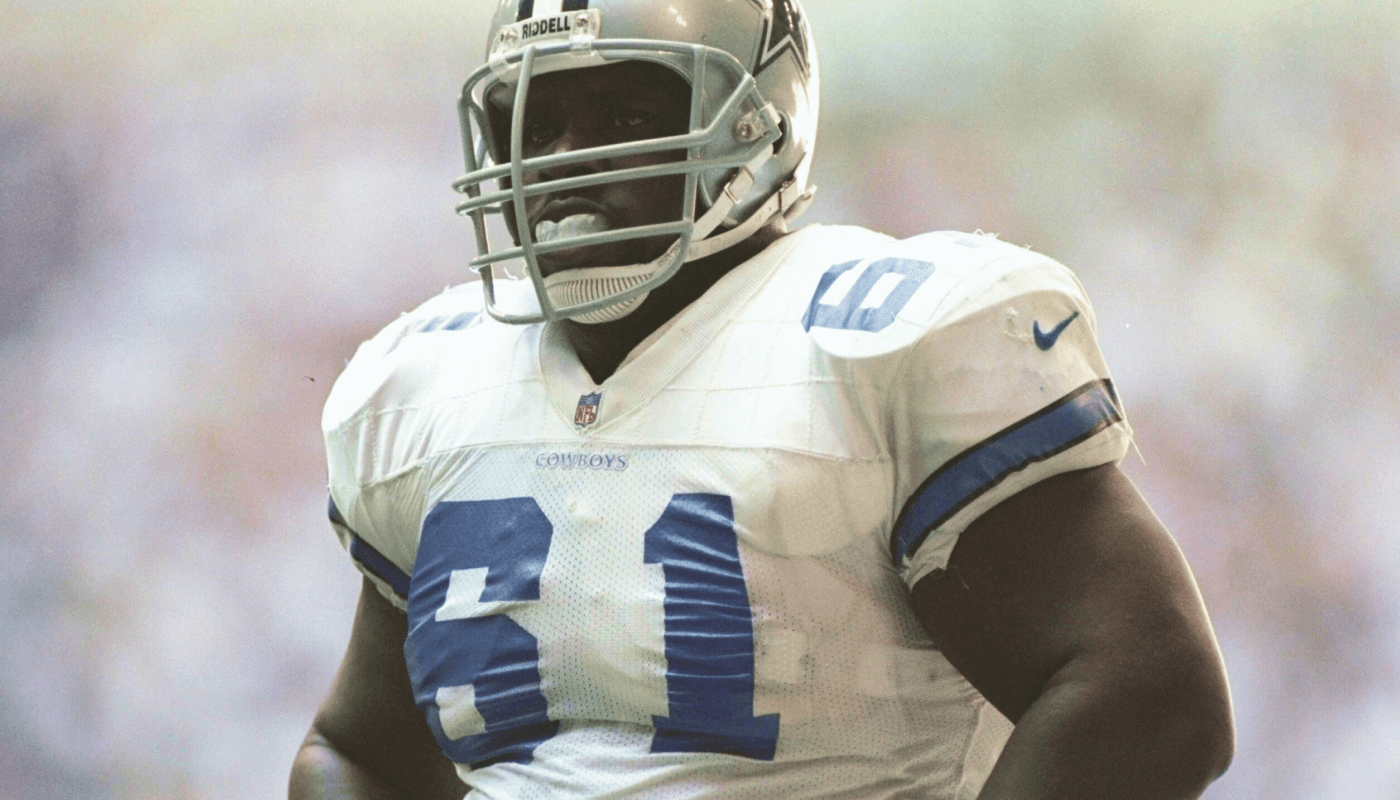
If you grew up watching NFL football in the 1990s, you already know the name. Nate Newton was a massive offensive lineman who played for the Dallas Cowboys from 1986 to 1998. He earned six Pro Bowl selections and two First-Team All-Pro honors. Most importantly, he helped lead the Cowboys to three Super Bowl championships in Super Bowls XXVII, XXVIII, and XXX. His teammates called him “The Kitchen” because he was so big. Emmitt Smith, Troy Aikman, and Michael Irvin got a lot of the headlines. But Newton was a key reason those legends could do their jobs.
How Did a Super Bowl Champion End Up Behind Bars?
After his football career ended, Newton’s life took a difficult turn. In November 2001, Louisiana state troopers pulled over a van Newton was driving and reported finding 213 pounds of marijuana inside. Just weeks later, in Ellis County, Texas, police stopped him again. That time, officers found $10,000 cash in his truck and 175 pounds of marijuana in a nearby vehicle. Newton pleaded guilty to federal drug trafficking charges in April 2002 and received a sentence of 30 months in federal prison. He was also fined $25,000 and ordered to complete 250 hours of community service by speaking to students about the dangers of drugs.
Newton served his time and eventually rejoined the public eye. He remained a beloved figure in the Dallas Cowboys community. But that federal conviction never went away. Until now.
I would like to thank President Trump and all of those that work under him who put this Pardon into effect. Thank you Sir for taking time out of your busy day in running this country. Thank you Sincerely and may God bless You. 🙏🏿
— Nathaniel Newton Jr (@61NateNewton) February 13, 2026
Nathaniel Newton Jr.
What Exactly Is a Presidential Pardon?
Before going further, it helps to understand what a pardon actually does. The U.S. Constitution gives the president broad power to grant pardons for federal offenses. A pardon forgives the offense, restores certain civil rights, and removes remaining legal penalties. However, it does not erase the conviction from historical records. Think of it like a permanent note in a file that says “forgiven” rather than erasing the file completely.
White House pardon coordinator Alice Marie Johnson announced Newton’s pardon alongside four other former NFL players. Johnson herself received a pardon from Trump during his first term for a drug-related conviction. She shared the news on social media, saying that Cowboys owner Jerry Jones personally delivered the good news to Newton. Newton responded publicly with a heartfelt thank-you to President Trump and Jones.
Why This Pardon Matters Beyond Football
Newton’s story touches a much bigger issue in American law and society. Right now, thousands of people across the country still have federal marijuana convictions on their records for offenses involving far smaller amounts than 175 pounds. Many of those people face real consequences every day. A drug conviction can make it harder to find housing, get a job, or even qualify for certain professional licenses.
Cannabis reform advocates were quick to point out this tension. Weldon Angelos, founder of the criminal justice nonprofit The Weldon Project, praised the pardon while noting that many others remain behind bars for similar or lesser offenses. Angelos himself received a cannabis-related presidential pardon during Trump’s first term.
The pardon also arrives at a significant moment in federal cannabis policy. In December 2025, President Trump signed an executive order directing the Attorney General to move marijuana from Schedule I to Schedule III of the Controlled Substances Act. Schedule I drugs are considered to have no medical use and a high abuse potential. Schedule III drugs are recognized as having accepted medical uses. That reclassification process is still ongoing.
The Bigger Picture on Cannabis and Criminal Justice
Newton’s case highlights something that makes many Americans shake their heads. When he was convicted in 2002, marijuana was illegal nearly everywhere in the United States. Today, 24 states plus Washington D.C. have legalized recreational marijuana. Many more allow medical use. What was once a serious federal crime is now a legal business activity for millions of Americans.

Nate Newton | The Dallas Morning News
This shift leaves a real mess for the people who were convicted under the old rules. Some advocates argue that anyone convicted of a marijuana offense that would be legal or treated less seriously today deserves a second look. A Gallup poll from late 2024 found that 64 percent of American adults support legalizing marijuana nationally.
What Nate Newton’s Pardon Teaches Us
Newton’s story is a powerful reminder that legal consequences can follow people for decades. He served his time, paid his fines, and spent years speaking to young people about making better choices. Yet that federal conviction remained a part of his official record until a presidential signature changed everything.
For cannabis policy watchers, this pardon is one small piece of a much larger puzzle. The federal government is slowly changing how it views marijuana. But change at the top doesn’t automatically undo the consequences felt by everyday people with old convictions. Advocates continue pushing for broader clemency efforts that would help not just famous athletes, but ordinary Americans still carrying the weight of outdated drug laws.
Nate Newton spent his football career protecting some of the greatest players the NFL has ever seen. Now, after more than 20 years, his record has finally received some protection of its own.
