
Can a high dose of creativity and a relaxed state of mind create a compelling story? Many artists and writers think so. They see a connection between cannabis culture and graphic novels.
The world of weed comics and stoner illustrations is growing. It shows a shift in how we view cannabis. But what’s the impact of these cannabis graphic novels on comics today?
We’ll look into how cannabis affects creativity and the stories it inspires. These stories are captivating many people.
Key Takeaways
- The rise of cannabis culture has influenced the graphic novel industry.
- Weed comics and stoner illustrations are becoming increasingly popular.
- Cannabis graphic novels offer a unique perspective on storytelling.
- The intersection of cannabis and comics reflects a broader cultural shift.
- Creative expression is being redefined through this joint adventure.
The Evolution of Cannabis in Sequential Art
The way cannabis is shown in comics has changed over time. This change mirrors how society views the substance. Comics and graphic novels have also changed their depiction of cannabis as society’s views have shifted.
From Prohibition Propaganda to Counterculture Expression
In the early days, comics often showed cannabis in a bad light. This was part of the effort to stop its use. But with the counterculture movement in the 1960s, cannabis started to be seen differently. It became a symbol of rebellion and not following the rules.
Artists began to use cannabis in their work to challenge the status quo. This was a big change from how it was shown before.
“Comics have long been a reflection of society, and the representation of cannabis is no exception. As our attitudes towards cannabis have evolved, so too has its depiction in sequential art.”
The Comic Code Authority and Drug Representation
The Comic Code Authority (CCA) had a big impact on how cannabis was shown in comics. It was set up in 1954 and had strict rules about what could be shown. This included rules about drugs, which meant cannabis was often shown in a bad way or not at all.
But as the CCA’s power decreased, creators started to show cannabis in new ways. They were able to explore themes related to cannabis more freely.
| Era | Cannabis Representation | Influencing Factors |
|---|---|---|
| Pre-1960s | Negative stereotypes, prohibition propaganda | Societal attitudes, CCA guidelines |
| 1960s-1980s | Counterculture symbol, rebellion | Counterculture movement, social change |
| Modern Era | Diverse representations, normalization | Legalization efforts, cultural acceptance |
Pioneering Cannabis Graphic Novels and Their Creators
Cannabis culture in graphic novels owes a lot to pioneers like Gilbert Shelton and Robert Crumb. Their work in underground comix has greatly influenced how cannabis is shown in comics. They broke new ground by challenging what was seen as acceptable in mainstream comics.
Gilbert Shelton’s “The Fabulous Furry Freak Brothers”
Gilbert Shelton’s The Fabulous Furry Freak Brothers is a key work in cannabis comics. It started in 1971 and tells the story of three freak brothers in a world of counterculture and cannabis. Shelton’s comic not only entertained but also taught readers about the cannabis culture back then.
Robert Crumb’s Counterculture Contributions
Robert Crumb is a big name in underground comix, and his work has shaped weed comics. His comics often showed cannabis as part of the counterculture, challenging mainstream values. His style and storytelling have inspired many comic artists.
Underground Comix Movement and Cannabis Culture
The underground comix movement of the 1960s and 1970s was key in highlighting cannabis culture in comics. This movement let creators make bold, challenging work, including stoner illustrations and stories about cannabis. Today’s cannabis comics still explore new ideas and push boundaries.
Visual Aesthetics of Stoner Illustrations
Stoner illustrations have grown to include many artistic styles and influences. The look of cannabis graphic novels is shaped by psychedelic patterns, bright colors, and surreal themes.
Psychedelic Influences and Artistic Techniques
Psychedelic patterns and swirling shapes are key in stoner illustrations. Artists use layering and texture to make their work stand out. Bright colors and bold lines add to the lively feel of these pieces.
Techniques used in stoner illustrations include:
- Layering
- Texture manipulation
- Bold line work
- Vibrant color schemes
Color Palettes and Visual Motifs in Cannabis Art
The colors in cannabis art are often bright and varied, showing the creative spirit of the culture. Common motifs like cannabis leaves, smoke, and surreal scenes add to the unique look of cannabis graphic novels.
The role of color in stoner illustrations is huge. It sets the mood and atmosphere. Artists try out different colors to get the right feel.
Cannabis as Character: Anthropomorphized Weed in Comics
In comics, cannabis has become a character in its own right. It’s often shown in funny and creative ways. This lets creators talk about cannabis culture and its effects in a fun way.
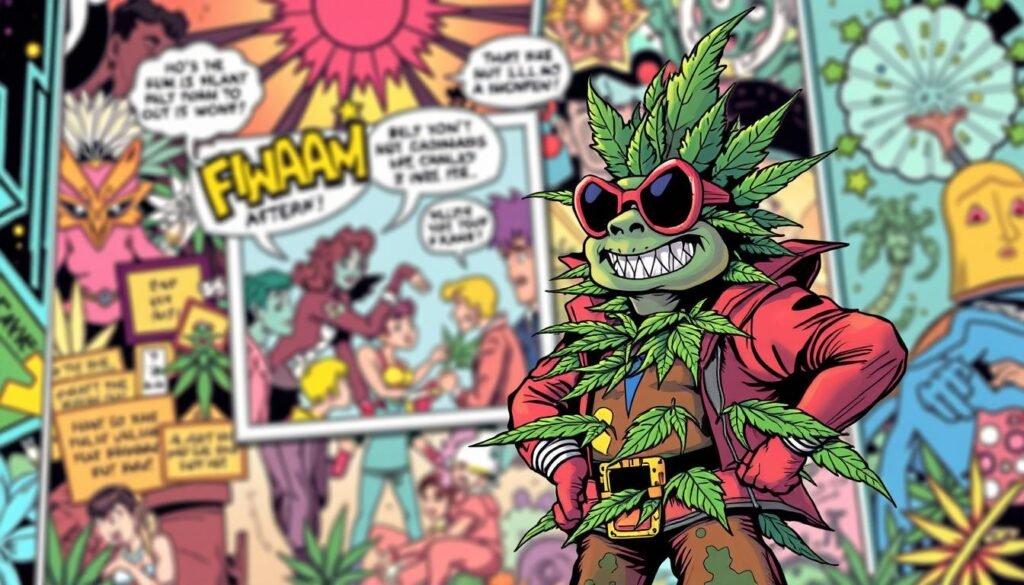
Cannabis in comics can be anything from simple plants that talk to superheroes. These characters entertain and also stand for cannabis culture.
Talking Plants and Cannabis Superheroes
Talking cannabis plants are common in weed comics. They add humor or help tell stories. These plants make cannabis more relatable to readers.
Cannabis superheroes are a more powerful symbol. They show the good sides of cannabis, like relaxation or creativity. These characters are a new way to see cannabis in popular culture.
Symbolic Representations of Cannabis Effects
The effects of cannabis are shown through cannabis characters. For example, a character might heal or relax people. These symbols show how people see cannabis and change how it’s viewed by others.
Looking at these symbols helps us understand cannabis culture’s growth. It shows how cannabis culture is becoming part of mainstream media through weed comics and stoner illustrations.
Weed Comics as Social Commentary
Weed comics are changing fast, using jokes and stories to talk about serious issues. They help break down the stigma around using cannabis. These comics give us a peek into the cannabis world and its effects on society.
Challenging Stigma Through Humor and Storytelling
Weed comics use jokes to make cannabis use seem normal. They show us characters and stories we can relate to. This makes cannabis users seem more like us, not just stereotypes.
For example, “The Fabulous Furry Freak Brothers” by Gilbert Shelton uses satire. It criticizes drug laws and how society views them.
Political Activism in Cannabis Sequential Art
Weed comics also push for political change. They talk about things like changing drug laws and fixing the justice system. Artists like Robert Crumb use their work to speak out against unfair rules and push for new ones.
This helps start a bigger conversation about making cannabis legal.
| Aspect | Description | Impact |
|---|---|---|
| Humor | Used to normalize cannabis use | Challenges stigma |
| Storytelling | Presents relatable characters and situations | Humanizes cannabis users |
| Political Activism | Addresses drug policy reform and social justice | Promotes change and awareness |
Weed comics are key in changing how people see cannabis. They use jokes, stories, and activism to shape public opinion. This helps move the debate on legalization and acceptance forward.
Notable Contemporary Cannabis Graphic Novels
The world of cannabis graphic novels has grown a lot in recent years. Creators are exploring new ideas and pushing the limits of the genre. This has led to a wide range of works that dive into different parts of cannabis culture.
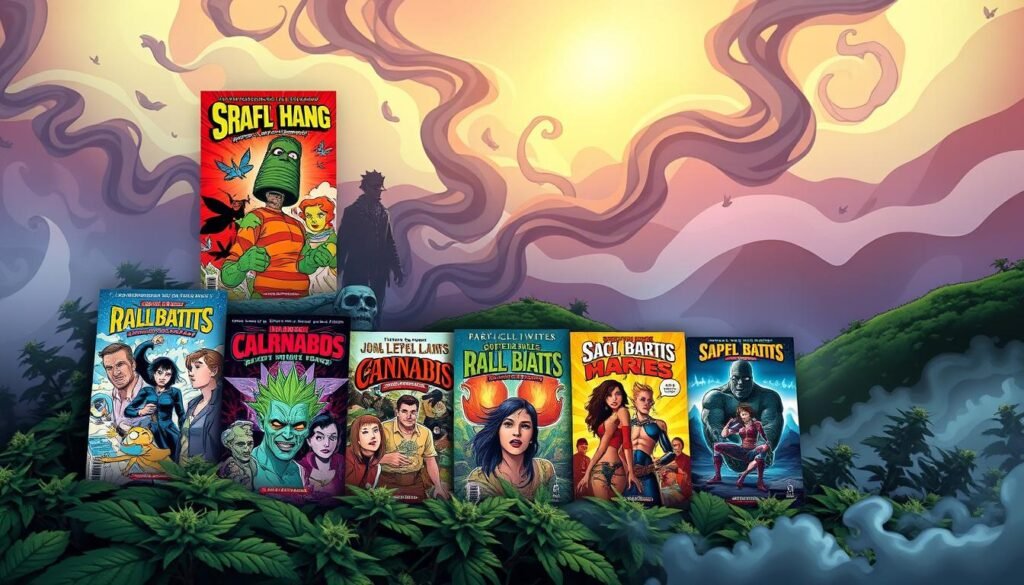
Box Brown’s “Cannabis: The Illegalization of Weed in America”
Box Brown’s “Cannabis: The Illegalization of Weed in America” stands out in the cannabis graphic novel world. Brown’s work gives a detailed look at how cannabis was made illegal in the U.S. It helps readers understand the history behind it.
Brian “Box” Brown’s Contributions
Brian “Box” Brown is a key figure in cannabis graphic novels. His work not only teaches about cannabis history but also questions common beliefs about it.
Noah Van Sciver and Jim Mahfood’s Contributions
Noah Van Sciver and Jim Mahfood are also big names in the field. They use humor and satire in their work. This gives a fresh view on cannabis culture.
Rising Stars in the Cannabis Comics Scene
New talent is also joining the cannabis comics scene. These rising stars are bringing new ideas and ways of telling stories. They are making the world of cannabis graphic novels even more exciting.
The variety of voices and views in cannabis graphic novels shows the genre’s growing acceptance. As creators keep exploring new ideas, we can look forward to even more interesting and engaging stories.
The Intersection of Legalization and Comic Book Publishing
The laws around cannabis are changing, opening new doors for comic book creators. With more states legalizing cannabis, the comic book world is diving into topics once off-limits.
Changing Legal Landscape’s Impact on Content
The shift in laws has made society more open to cannabis. Now, comic book creators can show cannabis use and culture freely. This change is seen in the stories they tell, pushing what’s okay in mainstream comics.
Creators are embracing the chance to share more detailed and realistic stories about cannabis. They explore its medical benefits, role in social justice, and cultural importance.
New Publishing Opportunities in the Cannabis Era
The cannabis industry’s growth has brought new chances for publishing. Comics and graphic novels about cannabis culture are gaining fans. Publishers are now more open to content once seen as too bold.
| Publisher | Notable Title | Genre |
|---|---|---|
| Comixology | Cannabis: The Illegalization of Weed in America | Non-fiction, Historical |
| Last Gasp | The Fabulous Furry Freak Brothers | Comedy, Counterculture |
| Fantagraphics | Various Cannabis-themed Comics | Varied |
As the cannabis industry grows, we’ll see more creative and engaging comics. The mix of legalization and comic book publishing is opening a new chapter in graphic novels.
Digital Revolution: Webcomics and Social Media Stoner Content
The digital age has changed how we see cannabis content. Now, creators use Instagram and webcomics to share their work. This has made it easier for many voices to be heard in cannabis culture.
Stoner illustrations are everywhere on social media. Artists can reach people all over the world. This has created a community for fans of cannabis culture.
Instagram Cannabis Illustrators to Follow
Instagram is full of cannabis-themed art. Many illustrators have gained fans for their stoner illustrations. They post high-quality content that speaks to the cannabis community.
- Artist 1: Known for their vibrant, psychedelic art that often features cannabis leaves and motifs.
- Artist 2: Celebrated for their humorous takes on cannabis culture, often incorporating memes and witty commentary.
- Artist 3: Recognized for their detailed, realistic illustrations that explore the intricacies of cannabis cultivation.
Webcomic Platforms Featuring Cannabis Themes
Webcomic platforms are filled with weed comics and cannabis themes. These platforms let creators explore complex ideas. They often challenge what’s seen in mainstream media.
Popular webcomic platforms have a wide range of cannabis content. You can find everything from funny strips to deep looks at the cannabis industry’s effects on society.
Collecting and Valuing Cannabis Graphic Novels
Collecting cannabis graphic novels is a fun hobby for those who love cannabis culture and comics. The market has grown a lot. Now, some titles and issues are worth a lot to collectors.
When you want to value cannabis graphic novels, several things matter. How rare a comic is, its condition, and how popular the series is all play a role. Comics that are hard to find or have special cover art can sell for a lot.
Rare and Valuable Cannabis Comics
Some cannabis graphic novels are rare and very important. For example, early comics with cannabis themes are highly sought after. Gilbert Shelton’s “The Fabulous Furry Freak Brothers” is a great example. Some editions of this comic can sell for a lot.
Building a Collection of Stoner Sequential Art
To start a collection, look for key titles and issues in cannabis comics. Go to comic book conventions, join online forums, and talk to other collectors. Make sure to check the condition and if the comics are real before buying.
By following these tips, you can build a valuable collection of cannabis graphic novels. It will show your love for the subject and might even grow in value over time.
Conclusion: The Growing Legitimacy of Cannabis in Graphic Storytelling
Cannabis is becoming more accepted in graphic storytelling, thanks to cultural and legal shifts. Since the underground comix movement, cannabis has been a part of comics. Pioneers like Gilbert Shelton and Robert Crumb introduced cannabis culture into their work.
Cannabis graphic novels have changed a lot. They’ve moved from simple propaganda to deep explorations of cannabis culture. Now, stoner illustrations and weed comics are common, with artists experimenting with visuals. The use of cannabis as a character has also led to funny and creative stories.
With more places legalizing cannabis, comics are changing too. The digital world has opened up new ways for creators to share their work. They can post on webcomic platforms and social media, reaching more people.
The future of cannabis comics looks exciting. A new generation of creators is mixing cannabis and comics in new ways. As attitudes towards cannabis change, we’ll see even more creative and engaging stories. This will make cannabis graphic novels a big part of comics.
FAQ
What is the significance of cannabis in graphic novels?
Cannabis is a big deal in graphic novels. It stands for counterculture, sparks social commentary, and is a canvas for artistic expression.
How has the representation of cannabis in comics changed over time?
Comics used to show cannabis as something bad. Now, it’s seen as a symbol of rebellion and a way to fight against unfair views on it.
What role did the Comic Code Authority play in shaping cannabis representation in comics?
The Comic Code Authority really shaped how cannabis was shown in comics. It banned any depiction of drug use, affecting how cannabis was portrayed.
Who are some pioneers in the cannabis graphic novel genre?
Gilbert Shelton and Robert Crumb are key figures. They were part of the underground comix movement, influencing how cannabis is shown in comics.
What are some notable contemporary cannabis graphic novels?
“Cannabis: The Illegalization of Weed in America” by Box Brown is a standout. It tells engaging stories about cannabis culture and history.
How is the legalization of cannabis influencing comic book publishing?
Legalizing cannabis opens up new doors for comics. It lets for more varied and detailed portrayals of cannabis in comics.
What are some popular platforms for cannabis-themed webcomics and illustrations?
Instagram and webcomic sites are great for cannabis-themed comics and art. They let creators share their work and connect with fans.
How can I start collecting cannabis graphic novels?
Start by looking for rare comics. Research the market and focus on themes or creators you like.
What are some key factors to consider when valuing cannabis graphic novels?
Value comics based on rarity, condition, and demand. Also, look at the creator’s fame and the comic’s cultural importance.
